Country-specific approvals matter, but they only tell part of the story. A market-specific number says a product passed one region's tests. European certification goes further, covering the product, the declared performance and the way the factory itself is run.
CE marking and EN 14351
In Europe, windows and external doors are covered by the harmonized standard EN 14351-1. To carry a CE mark, a manufacturer has to test and declare the product's performance across a defined set of properties, including thermal transmittance, acoustic performance, air permeability, water tightness and resistance to wind load. It is a single, comparable declaration of how the product actually performs.
ISO management systems
ISO standards certify the organization, not just a product. The common ones speak to different aspects of how a factory operates:
- ISO 9001 covers quality management, the processes that keep production consistent.
- ISO 14001 covers environmental management, how the factory manages its impact.
- ISO 45001 covers occupational health and safety.
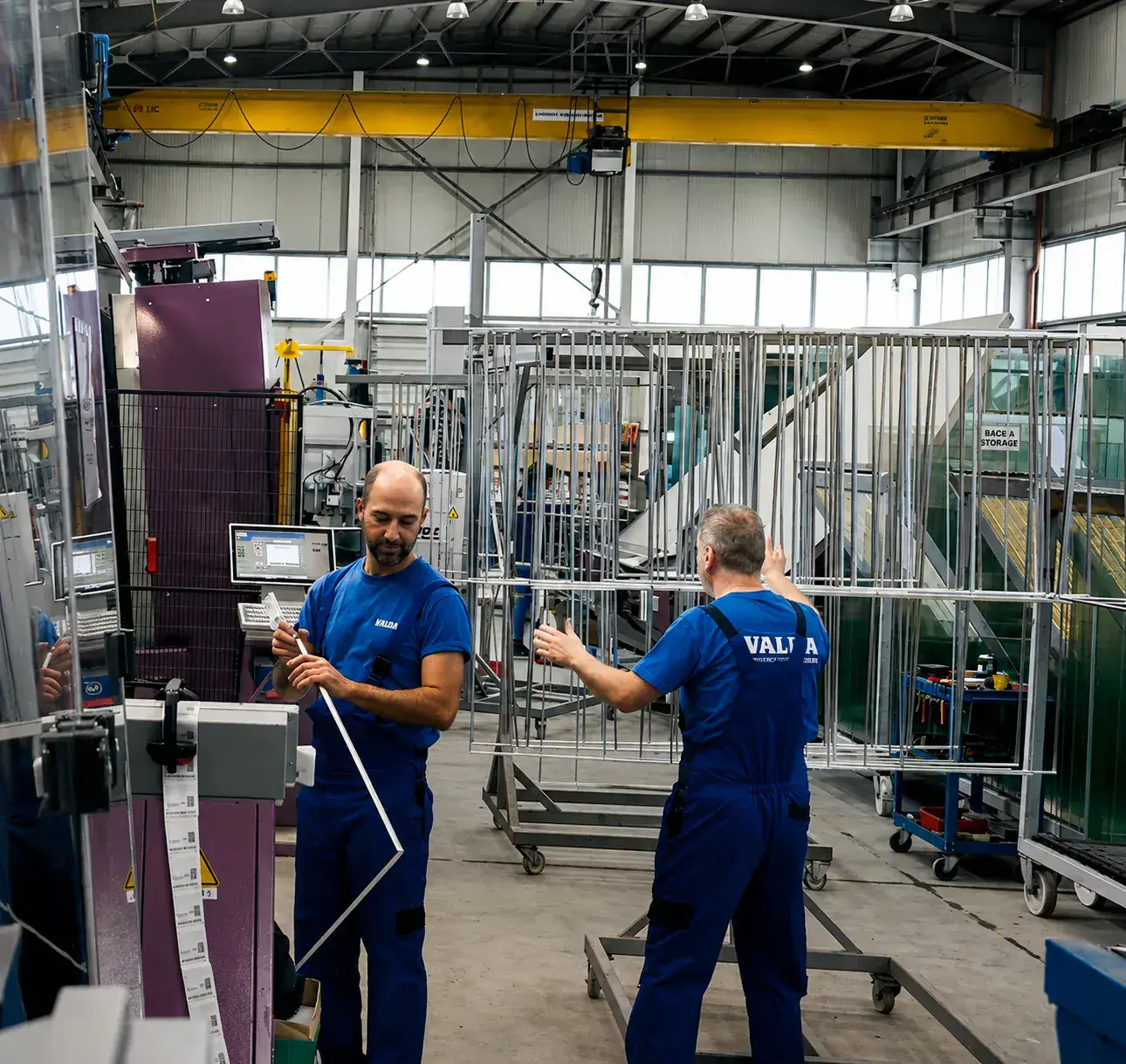
Together they say something a single product test cannot: that the whole operation behind the product is systematic, audited and repeatable.
A product approval certifies a window. A quality system certifies the factory that makes every window after it.
Why it matters for exported windows
When a product is engineered in Europe and shipped around the world, this layered certification is what underpins consistency. European standards set the baseline, and market-specific approvals then confirm the product for each destination. For a US project, that means European-grade quality behind the systems, with the local certification matched to the market on top.
If you would like the specific certifications and declarations for a system, our team can send them for your project.
FAQ
Frequently asked
What is CE marking on a window?
It is a European conformity mark showing the manufacturer has tested and declared the window's performance under the harmonized standard EN 14351-1, across properties like thermal, acoustic, air, water and wind resistance.
What does ISO 9001 certify?
ISO 9001 certifies a quality management system, meaning the processes a manufacturer uses to keep production consistent and controlled. It certifies the organization and its processes rather than a single product.
Is European certification enough for the US market?
European standards set a strong quality baseline, but each market also has its own approvals. A product is typically backed by European certification and then confirmed with the specific approvals required for the destination market.
Planning a project?
Tell us about your openings and we will match the right certified system.