An aluminum window profile begins as a plain cylinder of alloy called a billet. Everything that makes the finished frame strong, slim and energy efficient happens in the steps between that raw metal and the unit on your wall. Here is the journey.
1. The billet and the alloy
Window profiles are extruded from a 6000-series aluminum alloy, chosen because it balances strength, corrosion resistance and how cleanly it flows through a die. The billet is heated to around 500 degrees Celsius, hot enough to become soft and formable without melting.
2. The extrusion press
A hydraulic ram then forces the softened billet through a hardened steel die, the way toothpaste is squeezed from a tube. The shape cut into the die becomes the cross-section of the profile, every chamber, groove and gasket channel. This is where a slim sightline is won or lost, because the whole geometry is defined here.
3. Cooling and tempering
As the profile emerges it is quenched, then stretched straight and cut to length. It is still relatively soft, so it is aged in an oven to reach its final temper, typically T5 or T6. Only after ageing does the aluminum reach full strength.
4. The thermal break
A bare metal frame would conduct heat and cold straight through the wall. To stop that, two separate profiles, an inner and an outer, are joined by polyamide strips that are rolled into channels and crimped tight. This thermal break interrupts the path of heat, which is what lets a slim aluminum window still insulate well.
The thermal break is the reason a modern aluminum window can be both slim and warm. Without it, the metal would carry the outside temperature straight indoors.
5. The finish
Finally the profile is finished. Powder coating applies a durable colored layer, baked on for a hard, weather-resistant surface available in effectively any RAL. Anodising instead grows a protective oxide layer for a natural metallic look. Both protect the frame for decades, including in coastal air.
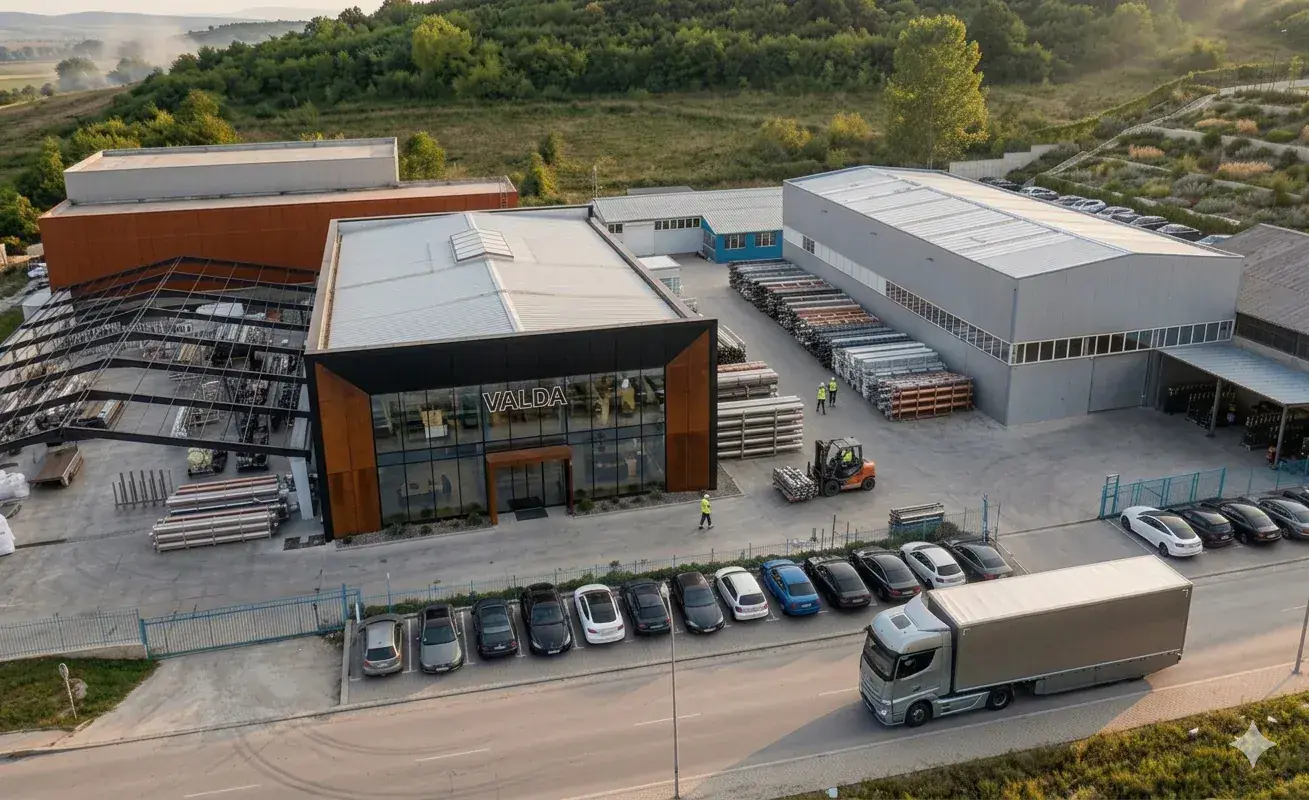
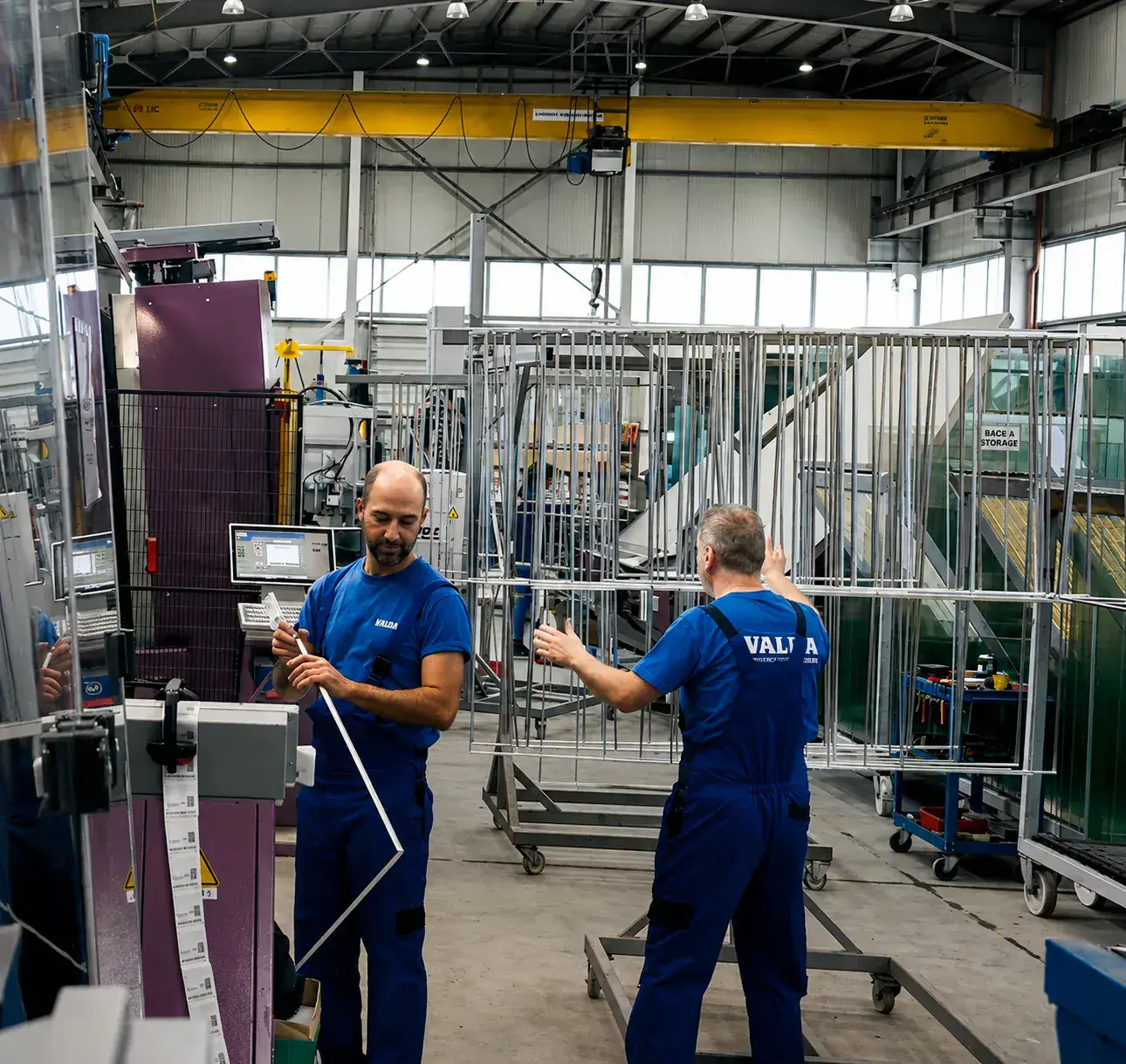
From there the profiles are machined, the corners assembled, and the glazing fitted. VALDA runs this process across our European factories, which is why the systems arrive with the precision and finish of European engineering.
FAQ
Frequently asked
What aluminum alloy are windows made from?
Most window profiles use a 6000-series alloy, which extrudes cleanly and offers a good balance of strength and corrosion resistance. It is then heat-treated to a T5 or T6 temper for full strength.
What is a thermal break in a window?
It is an insulating barrier, usually polyamide strips, that joins the inner and outer aluminum profiles. It interrupts the flow of heat and cold through the metal, so a slim aluminum frame can still insulate well.
Is powder coating or anodizing better?
Both are durable, long-lasting finishes. Powder coating offers almost any color and a matte or satin look; anodizing gives a natural metallic finish and a very hard surface. The right choice depends on the look you want.
Planning a project?
Tell us about your openings and we will match the right certified system.